
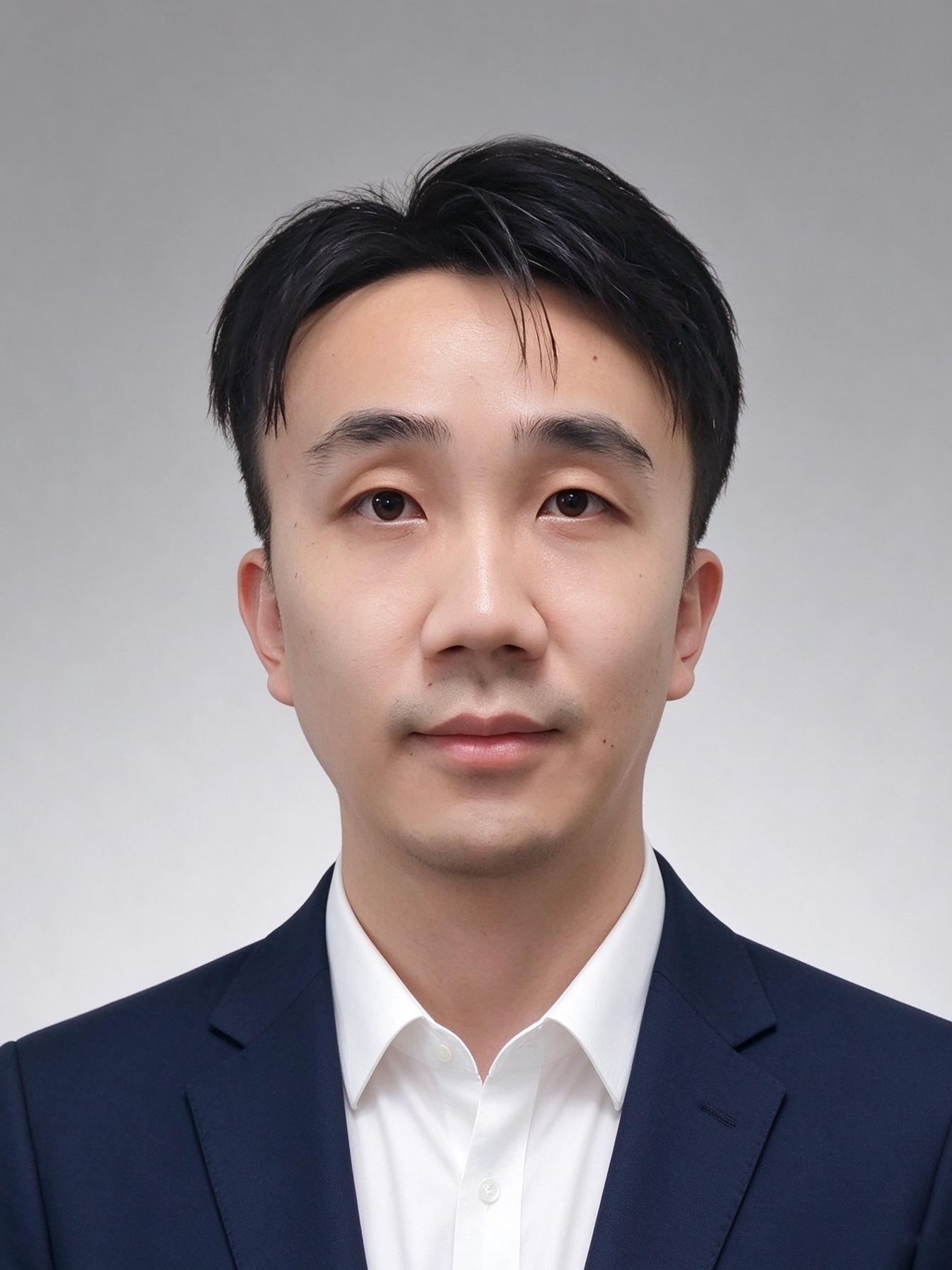
 个人信息
姓名:熊滕
国籍:中国
性别:男
毕业院校:新加坡国立大学
职称:研究员
学位:博士
电子邮件:xiongteng@ncu.edu.cn
所在单位:工程建设学院
办公地址:建工楼408
 个人信息
熊滕,男,江西南昌人,1992年生,博士,现任南昌大学特聘研究员、学科优秀人才。2017年硕士毕业于重庆大学供热、供燃气、通风及空调工程专业,2023年博士毕业于新加坡国立大学建筑环境专业(Built Environment)。曾任澳大利亚新南威尔士大学(UNSW Sydney)博士后研究员,参与澳大利亚研究理事会(ARC)Discovery项目DP230103050“建筑自适应日间辐射制冷与加热”(Adaptive Daytime Radiative Cooling and Heating for Buildings),在Riccardo Paolini副教授指导下开展研究,并隶属于高性能建筑研究组(High Performance Architecture, HPA Cluster)。主要从事气候自适应建筑围护结构、被动日间辐射制冷、太阳能热利用及复合相变储能材料等方向的研究,致力于推动建筑环境与能源应用、功能材料及热能管理等领域的交叉融合。
截至2026年10月,已发表学术论文30篇,参与撰写学术专著章节6篇,论文累计被引用890次以上,H指数为15。研究成果发表于建筑节能、能源利用及功能材料等相关领域的国际学术期刊,研究方向涵盖被动式建筑热调控、辐射制冷材料性能表征、复合相变储能及气候自适应建筑围护结构设计。担任 Energy and Buildings、Nano Energy、Applied Thermal Engineering、Journal of Energy Storage、Journal of Manufacturing Processes、Construction and Building Materials、Scientific Reports 等国际学术期刊审稿人,担任 Energies 期刊特刊客座编辑(Guest Editor),并受邀担任比利时弗兰德斯研究基金会(Research Foundation – Flanders, FWO)博士后研究项目评审专家。此外,担任国际能源与环境科学会议(International Conference on Energy and Environmental Science, ICEES 2025 & 2026)宣传主席(Publicity Chair),积极参与国际学术期刊专题组织、科研项目评审及国际学术会议组织工作。
[1] 2018-2023 哲学博士(PhD)-新加坡国立大学
[2] 2014-2017 工学硕士(MEng)-重庆大学
[1] 2024-2026 博士后研究员 新南威尔士大学(UNSW Sydney)
[2] 2023-2024 研究助理 中国科学院广州能源研究所(CAS-GIEC)
[3] 2018-2020 研究助理 新加坡国立大学(NUS)
南昌大学高层次人才科研启动经费,南昌大学,100万元,2026.10–2032.10,主持
建筑自适应日间辐射制冷与加热,澳大利亚研究理事会(ARC)Discovery项目(DP230103050),新南威尔士大学,56万澳元,2023.07–2026.07,主研
基于先进纳米材料的智能玻璃幕墙:利用物联网传感器及零能耗建筑中的气候舱与试验房开展真实环境测试,新加坡国立大学–旭硝子株式会社合作项目(R-296-000-183-597),30万新元,2018.06–2020.10,主研
用于智慧绿色家居的金属基纳米材料疏油抗菌纳米涂层,新加坡国立大学–城市发展有限公司(CDL)智慧绿色家居项目(R-296-000-174-720),20万新元,2017.06–2019.10,主研
夏热冬冷地区地源热泵系统岩土蓄能失调计算方法与评价研究,国家自然科学基金面上项目(51576023),重庆大学,75.2万元,2015.09–2020.09,主研
基于空气源热泵的多能互补供暖关键技术研究及示范后测评,国家重点研发计划(2016YFC0700406-02),重庆大学,98万元,2016.10–2022.03,主研
一作期刊论文
1. Xiong T, Zheng Z, Krajcic D, Ranzi G, Santamouris M, Paolini R. Angular solar absorption and thermal energy storage seasonally modulate radiative cooling [J]. Applied Energy 2027;427: 129152. (SCI IF2025 = 12.2, Q1)
2. Zheng Z, Xiong T (co-first author), Krajcic D, Zhai X, Santamouris M, Ranzi G, Paolini R. Thermal Energy Storage Mitigates Nighttime Heating Penalty, Condensation and Frosting Risk for Passive Daytime Radiative Coolers [J]. Energy and Buildings 2026; 117144. (SCI IF2025 = 8.0, Q1)
3. Xiong T, Kua HW, Shah KW, Huseien GF, Zhang B. Graphene nanoplatelets and copper foams for improving passive cooling performance of PCMs in Singapore’s tropical climate [J]. Journal of Energy Storage. 2024;80: 110195. (SCI IF2025 = 10.7, Q1)
4. Xiong T, Ok YS, Dissanayake PD, et al. Preparation and thermal conductivity enhancement of a paraffin wax-based composite phase change material doped with garlic stem biochar microparticles [J]. Science of The Total Environment. 2022;827: 154341. (SCI IF2024 = 8.0, Q1)
5. Xiong T, Shah KW, Kua HW. Application of graphite platelets for heat transfer enhancement of cementitious composites containing microencapsulated phase change materials [J]. Construction and Building Materials. 2022;318: 126024. (SCI IF2025 = 8.9, Q1)
6. Xiong T, Shah KW, Kua HW. Thermal performance enhancement of cementitious composite containing polystyrene/n-octadecane microcapsules: An experimental and numerical study [J]. Renewable Energy. 2021;169: 335-57. (SCI IF2025 = 9.1, Q1)
7. Xiong T, Zheng L, Shah KW. Nano-enhanced phase change materials (NePCMs): A review of numerical simulations [J]. Applied Thermal Engineering. 2020;178: 115492. (SCI IF2025 = 7.5, Q1)
8. Shah KW, Xiong T (co-first author). Multifunctional metallic nanowires in advanced building applications [J]. Materials. 2019;12: 1731. (SCI IF2025 = 3.7, Q2)
9. Xiong T, Wang Y, Yang X. Numerical investigation of dynamic melting process in a thermal energy storage system using U-tube heat exchanger [J]. Advances in Mechanical Engineering. 2017;9(5). (SCI IF2025 = 2.3, Q3)
10. Xiong T, Zheng Z, Khan HS, Kousis I, Julia OML, Krajcic D, et al. Inconsistent experiment design leads to systematic bias across the literature on daytime radiative cooling. Research Square (Preprint). 2025
书刊章节
1. Xiong T, Shah KW. Chapter 26 - Nanomaterials for enhancement of thermal energy storage in building applications. In: Mustansar Hussain C, editor. Handbook of Functionalized Nanomaterials for Industrial Applications: Elsevier; 2020. p. 829-64.
2. Zhang M, Xiong T, Gu X. Chapter 9 -Electronics cooling and thermal management using phase change materials. Navigating a Sustainable Future with Phase Change Materials for Energy Storage: Elsevier; 2026. p. 253-79.
3. Shah KW, Xiong T, Jin CCY. Microencapsulated Phase Change Materials and Their Applications for Passive Cooling in Buildings. In: Shanker U, Hussain CM, Rani M, editors. Handbook of Green and Sustainable Nanotechnology: Fundamentals, Developments and Applications. Cham: Springer International Publishing; 2023. p. 2111-31.
4. Shah KW, Xiong T. Nanomaterials and Nanocomposites for Energy-Efficient Building Envelopes. In: Kharissova OV, Martínez LMT, Kharisov BI, editors. Handbook of Nanomaterials and Nanocomposites for Energy and Environmental Applications: Springer, Cham; 2020. p. 1-28.
5. Shah KW, Huseien GF, Xiong T. 11 - Functional nanomaterials and their applications toward smart and green buildings. In: Samui P, Kim D, Iyer NR, Chaudhary S, editors. New Materials in Civil Engineering: Butterworth-Heinemann; 2020. p. 395-433.
6. Bizualem YD, Cui X, Gu X, Ren G, Mule-Stagno L, Xiong T, et al. Chapter 2 - Phase change materials for thermal energy storage: classification, challenges, and advances. In: Pandey AK, Balasubramanian K, editors. Navigating a Sustainable Future with Phase Change Materials for Energy Storage: Elsevier; 2026. p. 19-54

 EN
 登录
 学校主页